
Important practical/applied outcomes from microbiome research
- ZJU60 bacteria from wheat head microbiome
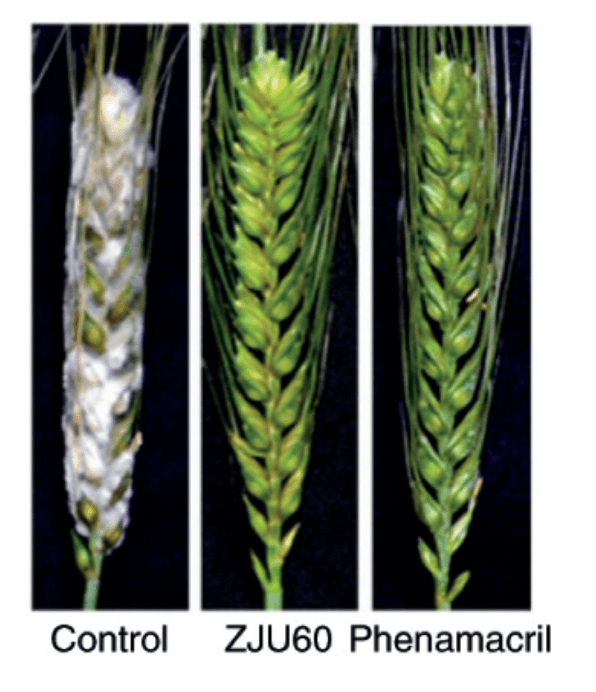
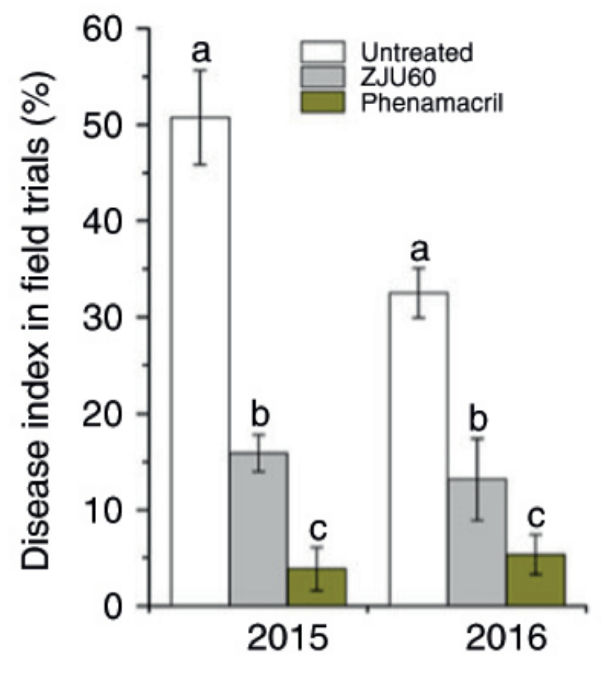
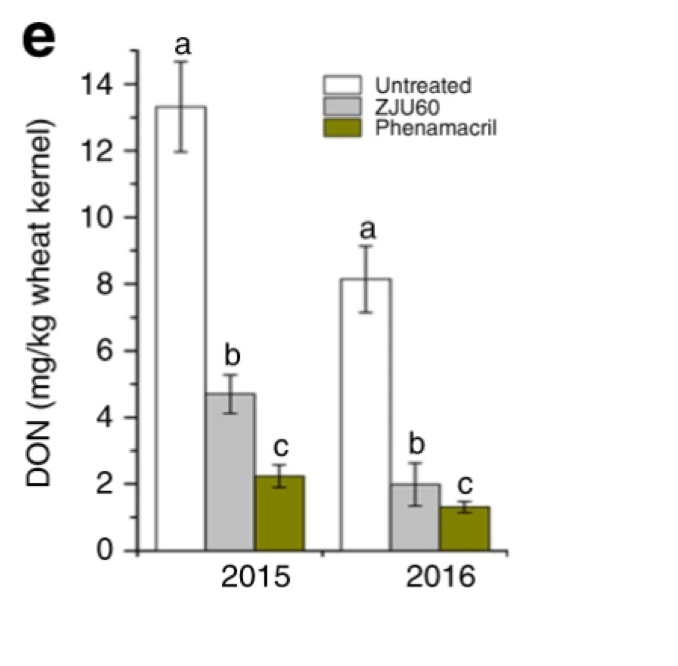
The microbiome of plants can be exploited as a biocontrol agent. Fusarium head blight is a disease of small grain cereal crops predominantly caused by the fungus Fusarium graminearium. Not only does the disease result in 80 million dollars in yield losses each year, it also contaminates grains with mycotoxins which are harmful to human health. As highlighted in (Chen et al., 2018) a wheat head microbiome bacteria ‘ZJU60’ was shown to significantly decrease virulence of the plant pathogenic fungus fusarium graminarium by altering histone acetylation. When wheat heads were inoculated both in growth chambers (refer to figure 1) and in the field (refer to figure 2) they showed a significantly lower disease index compared to untreated wheat heads. Mycotoxin production (DON) was also reduced in the field trials (refer to figure 3). Although the fungicide still showed the lowest disease index and mycotoxin production both in field and in growth chambers, the significant decline in fungal virulence by the ZJU60 bacteria could prove a promising biocontrol agent either in conjunction with or instead of the fungicide. Further studies investigating the impact of ZJU60 inoculation on other small grain cereal crops such as barley should be investigated.
- Microbiome research can highlight what drives syntrophic interactions between two organisms. Understanding this, can lead to exploitation and manipulation of the microbiome for human benefit.
For example, Abruscular Mycorrhizae(AM) fungi have been well studied in plant microbe interactions. It was previously thought that the fungi provide the plant with nutrients – notably phosphorous and nitrogen in return for carbohydrates from the plant. Consequently increasing plant growth and nutritional quality. However, recent studies have revealed that certain AM including Rhizophagus irregulars lacks the genes encoding type 1 multidomain fatty acid synthases (FAS), which synthesise palmitic acid in fungi. Fatty acids are key components of the cell, and their synthesis is essential for fungi. The absence of FAS in Rhizophagus irregulars suggests that its ability to survive in a symbiosis with plants is dependent on the provision of fatty acids including palmitic acid from the plant. This type of relationship can then be exploited for human benefit. For example, (Trepanier., et al, 2005) highlighted that overexpression of several fatty acid biosynthesis genes in Medicago truncatula (a pea plant) increased AM colonisation in root nodules. In contrast, knock out studies of these genes reduced AM colonisation. Increased AM fungi in root nodules is associated with increased growth and nutrient quality of plants. Therefore, highlighting how microbiome research can be used to exploit plant microbe interactions to increase crop yield and quality through the use of gene techniques.
 Plant microbiome